A product priced at 1,000 TL is not automatically perceived as expensive or affordable. The same price can be interpreted very differently depending on the brand, product category or presentation. Consumers consider not only the number itself but also brand trust, expected quality, product benefits and available alternatives.
Price perception analysis helps businesses understand how consumers evaluate the price of a product or service, how they connect price with perceived value and how price changes may influence purchasing decisions.
Rather than limiting price perception to the question “Is it cheap or expensive?”, Neuropiq uses a neuromarketing-based approach that examines consumers’ attention, perception and decision-making processes together.
What Is Price Perception?
Price perception refers to how consumers interpret a price in their minds. When consumers see a price, they do not make a purely mathematical assessment. They also consider previously encountered prices, competing products, trust in the brand and the benefits they expect from the product.
For this reason, a product priced at 2,000 TL may appear expensive to one consumer while another may consider it good value for money.
The main factors influencing price perception include:
Brand positioning
Perceived quality
Reference price
Competitors’ prices
The way a campaign is presented
The value offered by the product
In Neuropiq’s approach to how the brain processes price, price is not treated as an isolated number. Instead, it is considered a signal that consumers evaluate alongside their value and decision-making mechanisms.
How Is Price Perception Analysis Conducted?
The primary purpose of price perception analysis is to understand consumers’ reactions when they encounter a price and how they evaluate that information together with other product elements.
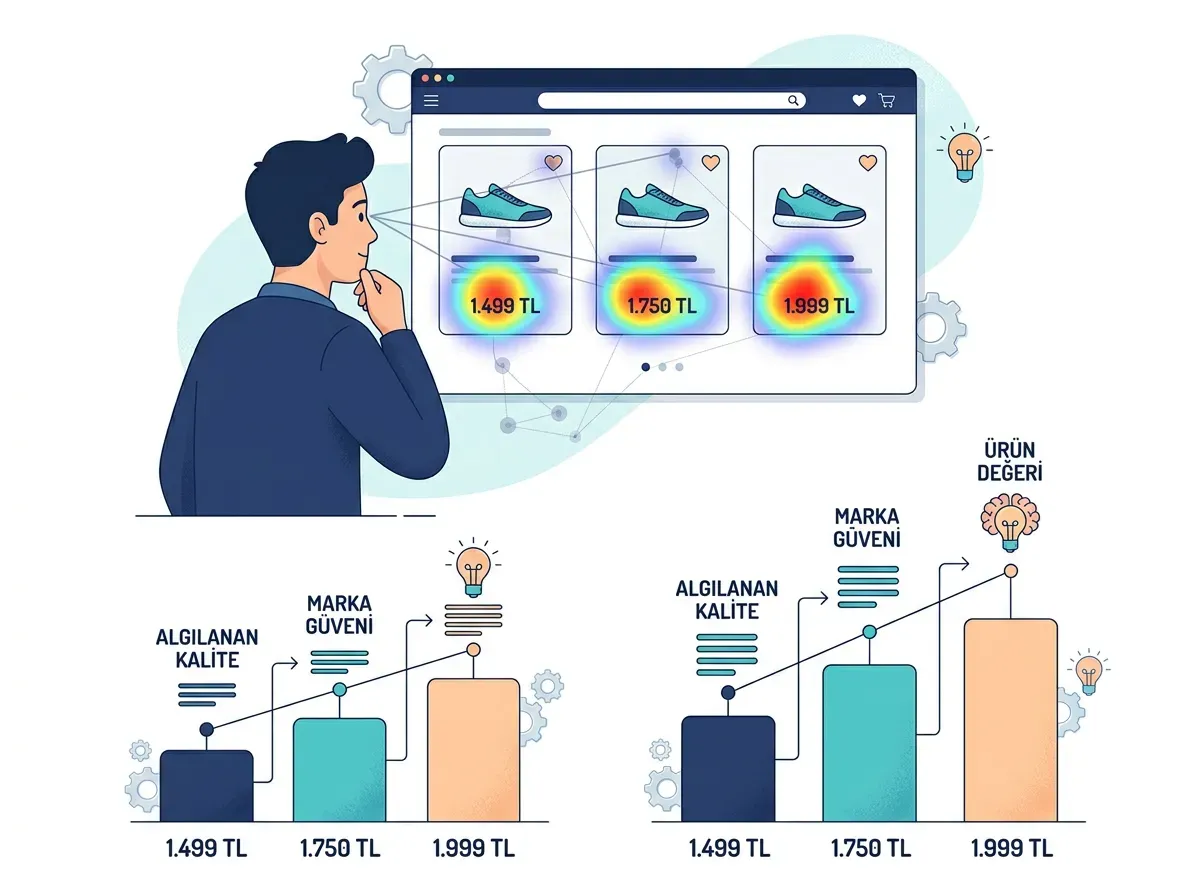
For example, when testing an e-commerce product page, researchers can examine whether consumers first notice the product image, brand name, product features or price area. Attention-measurement methods such as eye tracking can reveal when users notice the price, how long they examine it and which information they consider alongside it.
Different pricing scenarios can also be compared to evaluate changes in consumer perception. For example, the same product may be displayed with the following price options:
1,499 TL
1,750 TL
1,999 TL
Researchers can then examine how consumer reactions change across these different price points.
The goal is not always to identify the lowest possible price. The main objective is to determine a price level that is consistent with the value consumers perceive in the product.
What Makes Consumers Perceive a Price as Expensive?
A price being perceived as expensive cannot be explained solely by the consumer’s budget. Consciously or unconsciously, consumers ask themselves: “Is this product worth the amount I am paying?” This is where perceived value becomes especially important.
As product benefits, brand trust, design, perceived quality and user experience improve, consumers may become more willing to accept a particular price.
For the same reason, a low price is not always an advantage. Particularly in premium categories, a price that is significantly lower than expected may create concerns about quality or reliability.
Neuropiq’s studies examining the relationship between price and value also treat this as an important factor in understanding consumer decisions.

How Does a Reference Price Influence Consumer Decisions?
Consumers rarely evaluate prices in isolation. Instead, they establish a point of comparison.
For example, after seeing a product priced at 3,000 TL, consumers may perceive an alternative priced at 2,200 TL as more accessible. However, when the same product is displayed next to an alternative priced at 1,500 TL, it may appear expensive.
This effect is associated with anchoring in behavioural economics. The first piece of information encountered by consumers can create a reference point for their subsequent evaluations. Anchoring is an important cognitive concept used to understand pricing and consumer behaviour.
Therefore, the order in which products are displayed, the presentation of previous and current prices and the positioning of competing options can all influence price perception.
What Are the Benefits of Price Perception Analysis for Brands?
When brands make pricing decisions based only on costs and competitors’ prices, they may overlook the value perceived by consumers. Price perception analysis adds the consumer perspective to pricing strategy.
With this analysis, brands can evaluate:
The impact of different price options on consumers
The visibility of the price area on a product page
How discount communication is perceived
The alignment between pricing and brand positioning
These insights can support strategic decisions, particularly for new product launches, premium products, e-commerce pages and product groups undergoing price changes.
Where Can Price Perception Analysis Be Used?
Price perception analysis can be used in areas such as:
E-commerce product pages
New product launches
Retail products
Subscription models
Promotional pricing
Premium product positioning
Different price presentations, discount rates or campaign messages can be tested for the same product to determine which presentation receives a more positive consumer response.
Neuropiq’s neuromarketing solutions make it possible to evaluate price together with the product, brand, consumer attention and perception rather than treating it as an isolated factor.
Conclusion: The Right Price Is Balanced with Perceived Value
Pricing decisions can therefore address not only the question “How much are competitors charging?” but also “How much value do consumers see in this product?”
The right pricing strategy does not always mean being the cheapest option. What matters is establishing a strong and sustainable balance between the price and the value perceived by consumers.