The answer to the question “What is technical information?” is that it refers to information that explains the details, operating principles, features, and conditions of use of a product, service, system, or process. Technical information helps users make more informed decisions while also playing an important role in helping brands build credibility.
Today, consumers do not make decisions based only on visuals or advertising messages. Before purchasing, users examine product features, advantages, and technical details in order to make more informed choices.
At NeuroPiq, we develop analysis solutions designed to better understand user behavior and decision-making processes. In this article, we explain in detail what technical information is, why it is important, how it affects user decisions, and what advantages it provides for brands.
What Does Technical Information Mean?
The question “What is technical information?” is especially important for users who want to make the right decision when choosing a product or service. Technical information includes detailed explanations about how a product works, what features it has, which needs it addresses, and under what conditions it can be used.
Technical information generally includes the following elements:
Technical Information Element | Description |
|---|---|
Product Features | Covers the product’s physical structure, technical capacity, dimensions, materials, and core specifications. |
Usage Details | Explains where, how, and for which needs the product can be used. |
Performance Values | Describes measurable characteristics such as durability, speed, efficiency, or operating capacity. |
Technical Advantages | Explains the benefits provided to the user, the product’s strengths, and how it differs from alternatives. |
Operating Principles | Describes how the product or system works, which mechanisms it uses, and its basic processes. |
Application Conditions | Defines the environment, usage conditions, and technical requirements needed for correct and efficient use. |
For example, reviewing the technical specifications of an electronic product can help users determine whether it meets their expectations before making a purchase.

Why Is Technical Information Important for Users?
One of the most important aspects of understanding what technical information is is recognizing its influence on user decision-making.
Before purchasing a product or service, users do not evaluate only factors such as price or appearance. They also try to understand whether the product is suitable for their needs.
Technical information can provide users with several advantages:
Supports more informed decision-making,
Clarifies product expectations,
Increases confidence,
Reduces the risk of making the wrong purchase,
Improves the user experience.
Especially for complex products or services, providing accurate technical information can help users complete the purchasing process more easily.
How Does Technical Information Affect Brand Trust?
Today, users expect brands not only to offer products but also to provide accurate and transparent information.
From a brand perspective, the answer to “What is technical information?” is that it is also a communication tool that provides value, builds trust, and supports the purchasing decision.
When a brand presents technical information clearly and understandably, it can:
Create a perception of expertise,
Increase user trust,
Strengthen brand authority,
Support customer relationships.
In our experience, one of the most important factors in the decision-making process is how clearly and understandably a brand communicates its information. Simplifying complex technical details can help users understand a product more quickly.
To learn more about product information and user decision-making, you can read our article “Why Do People Look at Product Information?”.
How Does Technical Information Affect Purchase Decisions?
Purchasing decisions are shaped not only by consumer needs but also by the information available during the decision-making process.
This is where the importance of technical information becomes especially clear from a consumer behavior perspective.
When users have sufficient information about a product, they can:
Evaluate whether the product is suitable for their needs,
Compare it with alternative products,
Make a more confident purchasing decision.
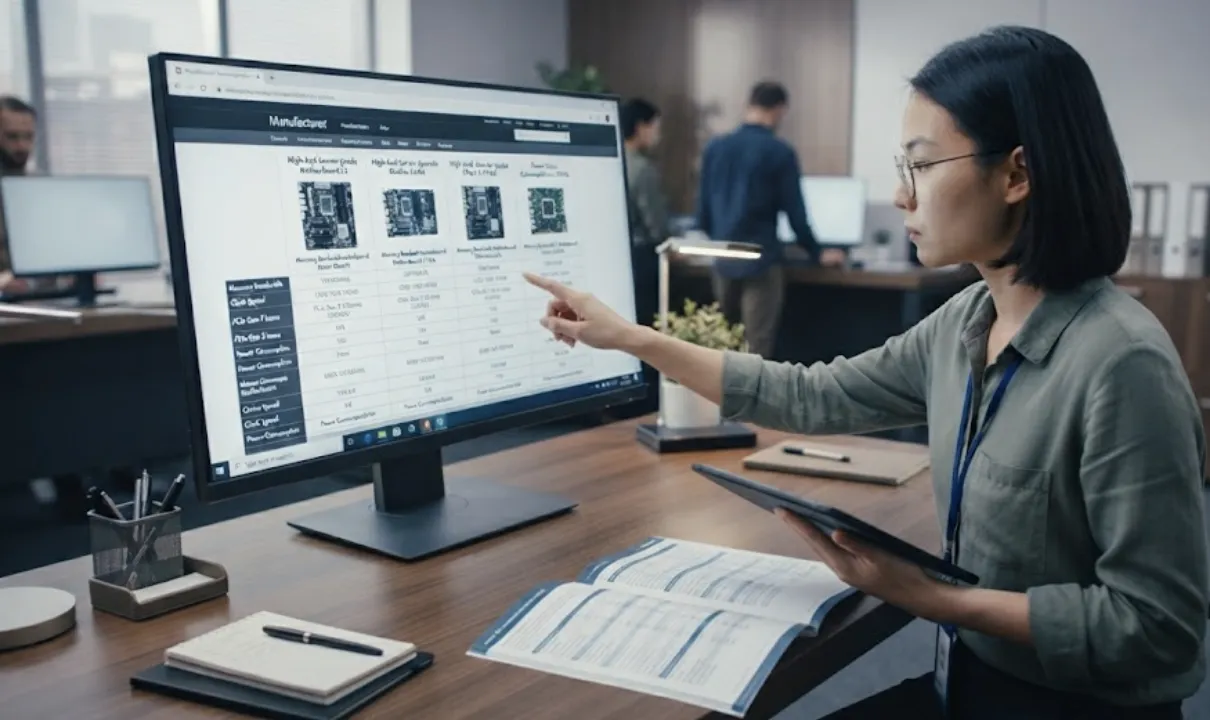
For example, when choosing between two different products, a user may consider not only brand awareness but also technical specifications, practical benefits, and performance details.
What Is the Relationship Between Technical Information and User Experience?
User experience includes all interactions a person has with a brand or product.
Well-presented technical information can positively influence the user experience.
An effective technical information presentation should:
Be easy to understand,
Avoid unnecessary complexity,
Address the user’s actual needs,
Support the decision-making process.
Especially on digital platforms, where users often conduct research quickly, technical information should be presented in a simple, accessible, and scannable format.
How Should Technical Information Content Be Prepared?
When creating effective technical information content, user expectations should be taken into consideration.
Use Clear and Understandable Language
Technical terms should be explained when necessary, and the content should be written in a way that users can easily understand.
Provide Accurate and Up-to-Date Information
The reliability and accuracy of the information provided directly affect brand perception and user trust.
Focus on User Needs
Instead of simply listing technical specifications, brands should explain what practical benefits those features provide to the user.
What Is the Relationship Between Technical Information and Neuromarketing?
User decision-making processes are not based solely on logical evaluations. Emotional and cognitive factors also play an important role in purchasing behavior.
At NeuroPiq, when analyzing user behavior, we evaluate how people respond to information, which content receives more attention, and which factors influence their decision-making processes.
Presenting technical information effectively can:
Increase user attention,
Strengthen perceptions of trust,
Improve the overall brand experience.
Understand User Behavior with NeuroPiq
Creating successful communication strategies requires understanding not only what users say, but also how they behave throughout the decision-making process.
At NeuroPiq, we analyze consumer behavior to help brands better understand user needs and expectations.
To improve user experience and strengthen brand trust with more effective technical information strategies, you can explore NeuroPiq’s solutions.